Choosing the right flooring is one of the smartest moves you can make in any home improvement project. The floors set the tone for every room, influence how easy the space is to keep clean, and can even affect your home’s resale value. There is no universal best option—what works beautifully in a dry living room can fail quickly in a kitchen or bathroom. The strongest choice always depends on the room’s moisture levels, how much traffic it gets, your budget, and the way you actually live day to day.
Key Factors When Choosing Flooring for Home Improvement
Before settling on a material, think through a few practical points. How much daily wear will the floor face from kids, pets, or heavy furniture? Is the space prone to spills or humidity? Do you prefer something soft and warm underfoot or a hard surface that cleans up fast? What can you comfortably spend per square foot, and how long do you plan to stay in the home? Durability, water resistance, maintenance needs, comfort, and cost all interact, so matching the floor to the specific room matters more than chasing a single trendy look.
Hardwood Flooring for Lasting Value
Hardwood remains a classic favorite for living spaces. Solid hardwood offers natural warmth and can be sanded and refinished multiple times over many decades, while engineered hardwood provides similar beauty with better stability in changing humidity. Both add lasting value and appeal to future buyers, though they cost more upfront and need protection from standing water. They shine in living rooms, dining rooms, and bedrooms where moisture is not a constant concern.
Luxury Vinyl Plank and Tile as Versatile Options
Luxury vinyl plank and tile have become go-to options for many modern homes. Today’s versions look convincingly like real wood or stone, feel comfortable underfoot, and are fully waterproof in quality products. They handle spills, pets, and heavy use well, clean up easily, and work in almost every room, including kitchens, bathrooms, and basements. They cannot be refinished and typically last fifteen to twenty-five years, but the combination of performance and realistic style makes them hard to beat for busy households.
Laminate Flooring for Budget-Friendly Style
Laminate offers a more budget-friendly path to a wood-look floor. Better versions now feature water-resistant cores and convincing textures, making them suitable for living areas and bedrooms with controlled moisture. They install relatively easily and resist scratches well, yet they still fall short of true waterproof performance and cannot be refinished when worn. For pure cost savings in drier spaces, laminate remains a practical contender.
Tile Flooring for High-Moisture Areas
Tile, especially porcelain, delivers outstanding durability where water and heavy use meet. It stands up to kitchens, bathrooms, laundry rooms, and entryways without warping or rotting, and it comes in endless styles including large-format and wood-look designs. The surface can feel hard and cold underfoot, and grout needs occasional attention, but few materials match its toughness and longevity when properly installed.
Carpet for Comfort and Softness
Carpet still has a clear place where comfort matters most. Soft underfoot and excellent at absorbing sound, it turns bedrooms and quieter living spaces into cozy retreats. Modern fibers resist stains better than older versions, yet carpet holds allergens more readily, stains more easily, and generally does not last as long as hard surfaces in high-traffic or damp areas.
Best Flooring Choices by Room
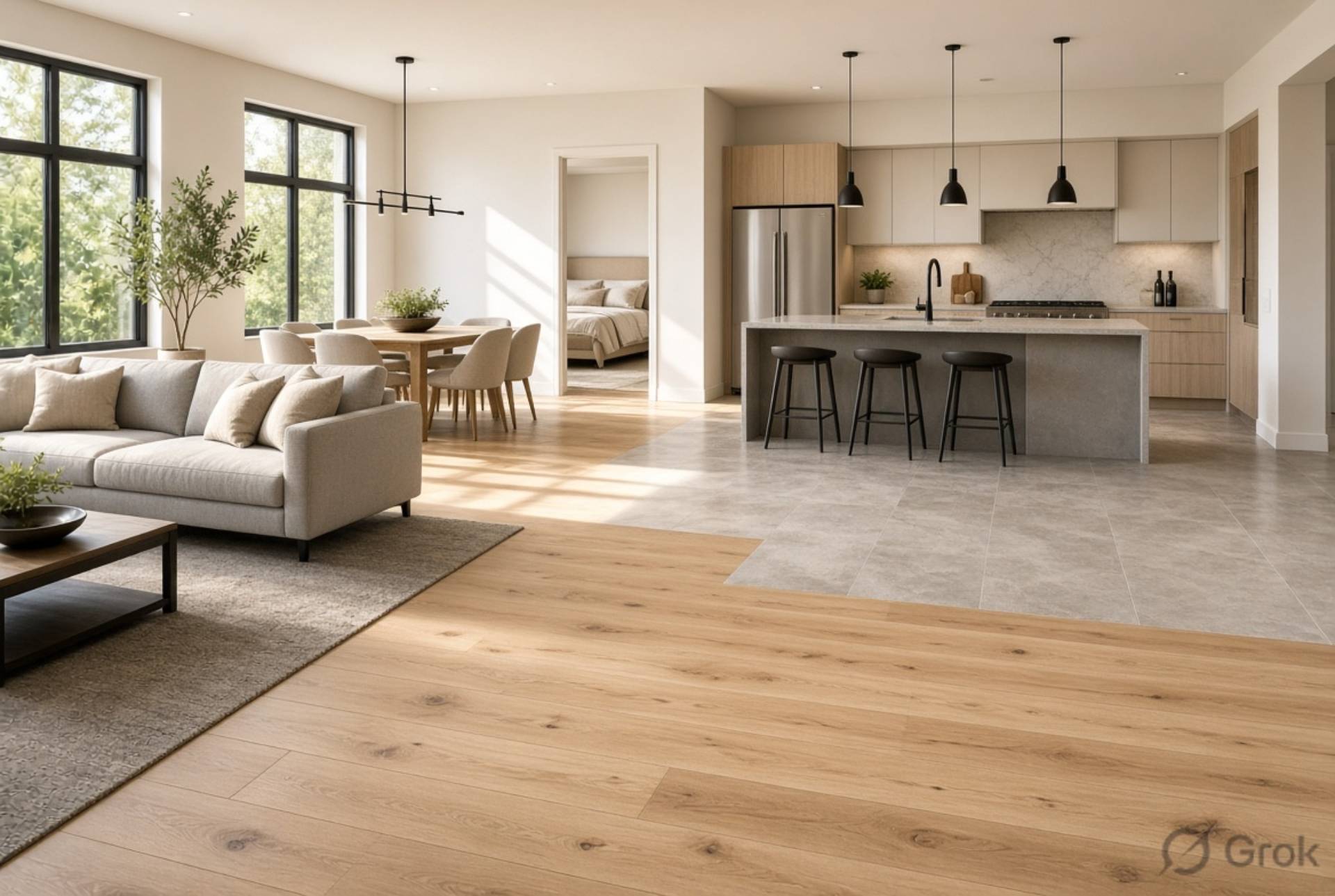
Matching the material to the room makes the biggest difference. Kitchens and bathrooms benefit most from waterproof options like luxury vinyl or porcelain tile. Living rooms and dining areas often look and feel best with hardwood or a high-quality vinyl that can handle daily life. Bedrooms lean toward the softness of carpet or the clean simplicity of wood or vinyl. Basements and entries need moisture resistance above almost everything else.
Practical Tips for a Successful Flooring Project
Whatever you choose, success comes down to preparation and realistic expectations. Check that the subfloor is level and dry, order a little extra material for cuts and future repairs, and protect the finished floor with rugs in high-traffic paths and pads under furniture. Regular sweeping and the right cleaner keep most modern floors looking good for years. Take the time to weigh how each room is used, test samples in your own light, and balance the upfront cost against long-term performance. The right floors will serve your home comfortably and reliably, turning a major renovation step into one of the most satisfying upgrades you make.
Conclusion
The best flooring for your home improvement project is the one that fits the way you live and the demands of each room. Hardwood brings lasting warmth and value to drier living spaces, while luxury vinyl offers reliable waterproof performance and realistic style almost anywhere. Laminate keeps costs down without sacrificing a wood look, tile stands up to the toughest wet areas, and carpet delivers unmatched comfort where softness matters most.
Take time to weigh moisture, traffic, budget, and how long you plan to stay. Test samples in your own light, prepare the subfloor properly, and protect the finished surface with simple habits. When the choice matches real daily life, new floors become one of the most satisfying and lasting upgrades you can make—improving both the feel of your home and its long-term value.