Owning a home in Sparks means dealing with a range of seasonal demands, from hot summer temperatures to freezing winter conditions. That makes regular home system maintenance especially important. Keeping your heating, cooling, plumbing, electrical, and ventilation systems in good condition can help prevent unexpected breakdowns and keep everyday living more comfortable. For homeowners who need professional help, HVAC and plumbing services in Sparks can also be useful when routine maintenance turns into a repair or inspection.
The key is not to wait until something stops working. A small leak, unusual HVAC noise, slow drain, or inconsistent water temperature may be an early warning that deserves attention. A simple maintenance routine can help you spot these problems before they become more disruptive or expensive.
Why Home System Maintenance Matters in Sparks
Sparks experiences significant temperature changes throughout the year. The National Weather Service has recorded both very hot summer conditions and freezing temperatures in the Sparks area, with cold-weather warnings noting that unprotected outdoor plumbing can be damaged by freezing temperatures.
These conditions can put different parts of a home under stress at different times of the year. Your air conditioner may work hard during summer heat, while your heating system and plumbing become more important as temperatures fall.
Preventive maintenance gives homeowners an opportunity to address wear and minor problems before they interfere with daily life.
Maintain Your HVAC System Before Extreme Weather
Heating and cooling equipment tends to get the most attention when it stops working, but seasonal preparation is more effective than emergency troubleshooting.
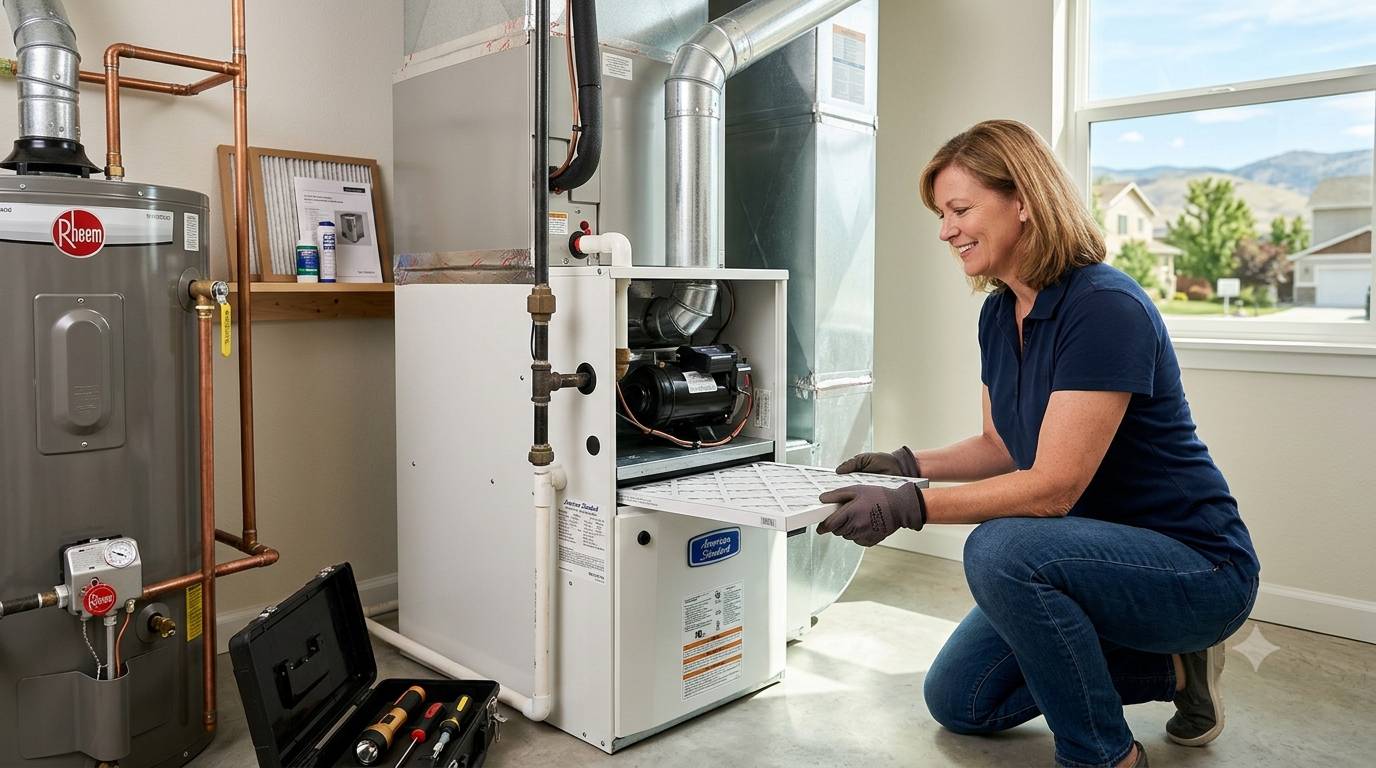
Before periods of heavy use, inspect the HVAC system and replace or clean filters according to the manufacturer’s recommendations. A dirty filter can restrict airflow and make the system work harder. Homeowners should also keep outdoor equipment clear of leaves, dirt, vegetation, and other debris.
Pay attention to changes in performance. Uneven temperatures, unusual sounds, weak airflow, unpleasant odors, or unexpectedly high energy use can indicate that professional evaluation is needed.
Annual professional maintenance can also help identify worn components or other issues that are not obvious during a basic homeowner inspection.
Protect Your Plumbing Throughout the Year
Plumbing problems do not always begin with a dramatic burst pipe. They can start with a dripping faucet, slowly draining sink, running toilet, or small leak beneath a cabinet.
Make a habit of checking visible pipes, faucets, water supply connections, and areas around water heaters. Look for moisture, corrosion, stains, or unexplained puddles. If water pressure suddenly changes or a drain repeatedly becomes slow, investigate rather than repeatedly treating the symptom.
Winter deserves special attention. When freezing temperatures are expected, homeowners should take reasonable steps to protect exposed plumbing, particularly outdoor lines and connections. The National Weather Service specifically warns that sub-freezing conditions can damage unprotected outdoor plumbing.
Don’t Ignore Your Water Heater
Water heaters work quietly in the background, which makes them easy to overlook. Yet problems can become obvious very quickly when hot water runs out unexpectedly or a leak develops.
Check around the unit periodically for signs of water, corrosion, or other visible damage. Pay attention to unusual noises and changes in hot-water performance. If you notice a leak or another significant problem, avoid attempting complicated repairs unless you have the appropriate expertise.
Homeowners should also follow the manufacturer’s maintenance recommendations and have older or problematic equipment professionally evaluated when necessary.
Build a Simple Home Maintenance Routine
A practical schedule makes maintenance easier because you do not have to remember everything at once. Consider organizing tasks by frequency:
- Monthly: Check for visible plumbing leaks, dripping faucets, unusual HVAC sounds, and clogged drains.
- Seasonally: Prepare heating and cooling equipment before periods of heavy use and inspect outdoor plumbing.
- Annually: Arrange appropriate professional inspections or maintenance for major HVAC, plumbing, and water-heating equipment.
- As needed: Address unusual odors, water stains, pressure changes, repeated clogs, or equipment that suddenly performs differently.
The exact schedule will depend on the age and condition of your home and the recommendations for individual equipment. Keeping a simple maintenance record can help you remember when filters were changed, inspections were completed, or repairs were made.
Know Which Problems Need a Professional
Not every home maintenance issue is a do-it-yourself project. Basic tasks such as replacing an accessible HVAC filter or checking for visible leaks are generally straightforward, but more complicated repairs can involve electricity, gas, pressurized water, refrigerants, or specialized equipment.
Call a qualified professional when you encounter problems such as:
- Persistent plumbing leaks
- A water heater that is leaking or malfunctioning
- HVAC equipment that will not heat or cool properly
- Electrical or mechanical components that require diagnosis
- Repeated drain or sewer problems
- Gas-related concerns or unusual odors
- Frozen or burst plumbing
Getting professional help early can also prevent homeowners from turning a manageable problem into a larger one through an incorrect repair.
Common Maintenance Mistakes to Avoid
One of the biggest mistakes homeowners make is waiting for obvious failure. Systems often provide warning signs before they stop functioning completely.
Another common mistake is treating maintenance as a one-season responsibility. An air conditioner may receive attention in summer while plumbing is forgotten until winter, even though both systems need year-round awareness.
Finally, avoid assuming that a quick internet fix is appropriate for every repair. Manufacturer instructions, equipment specifications, local requirements, and the actual cause of a problem all matter. When you are unsure, professional diagnosis is usually safer than repeatedly replacing parts or treating symptoms.
Conclusion
Home maintenance does not have to mean constantly working on your house. The most effective approach is consistent observation, timely basic care, and professional assistance when a problem falls outside your comfort level or expertise.
For Sparks homeowners, seasonal temperature changes make HVAC and plumbing particularly important, but the same principle applies to every major home system: notice changes early, follow recommended maintenance schedules, and deal with small problems before they become emergencies.
A well-maintained home is not necessarily one where nothing ever goes wrong. It is one where homeowners are prepared to recognize problems, respond appropriately, and keep essential systems working reliably.